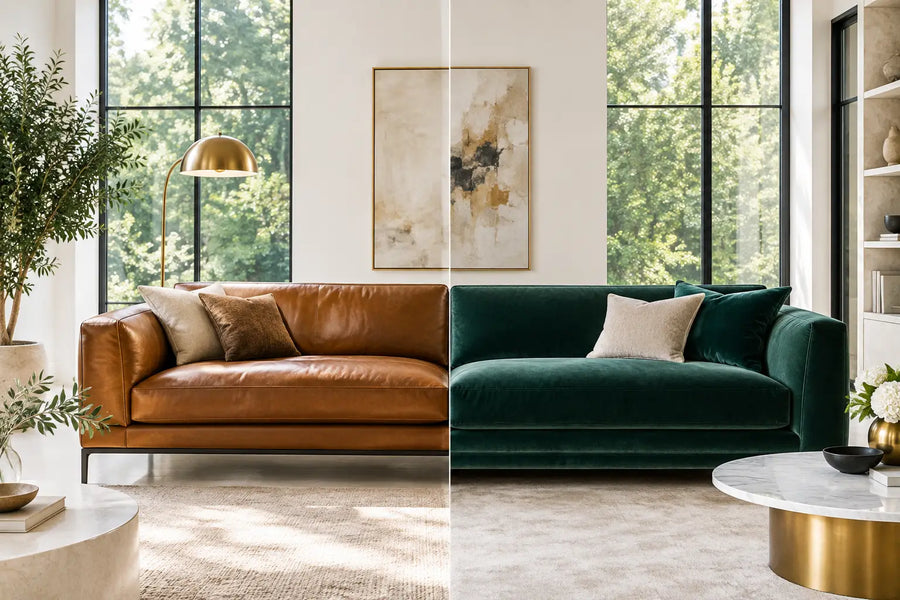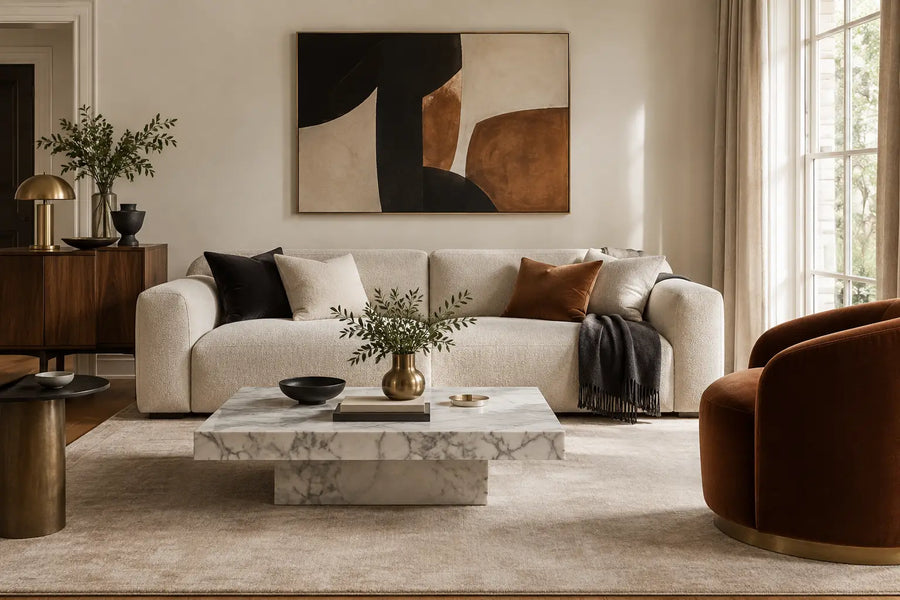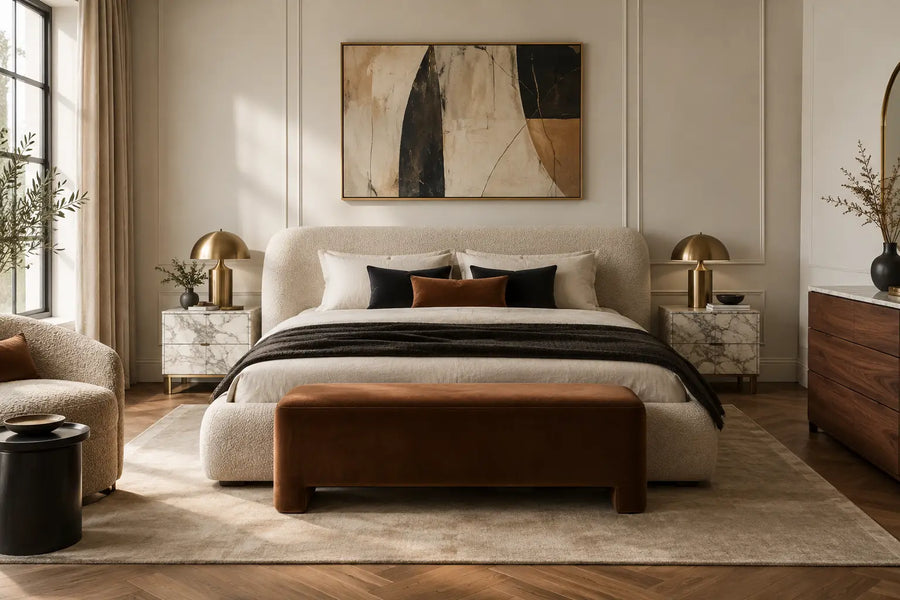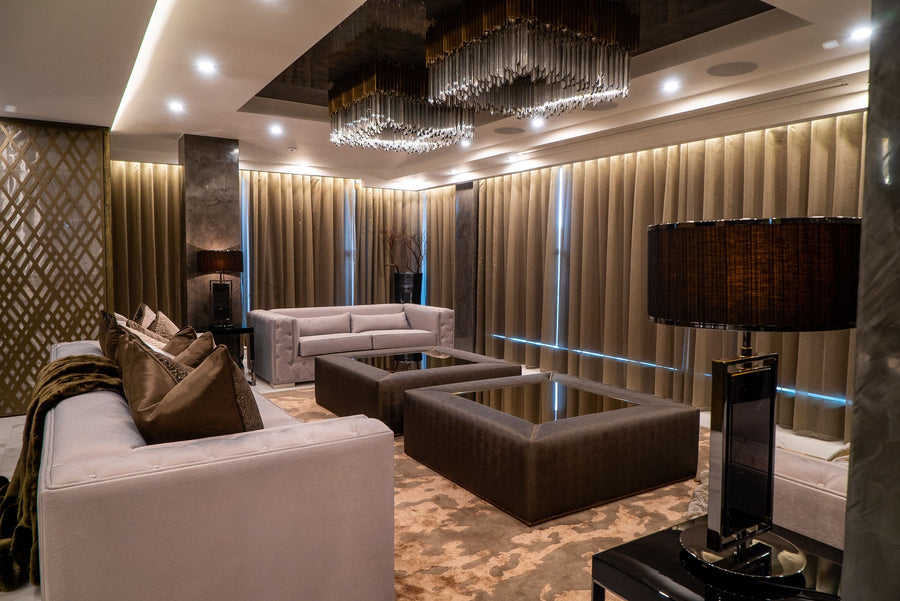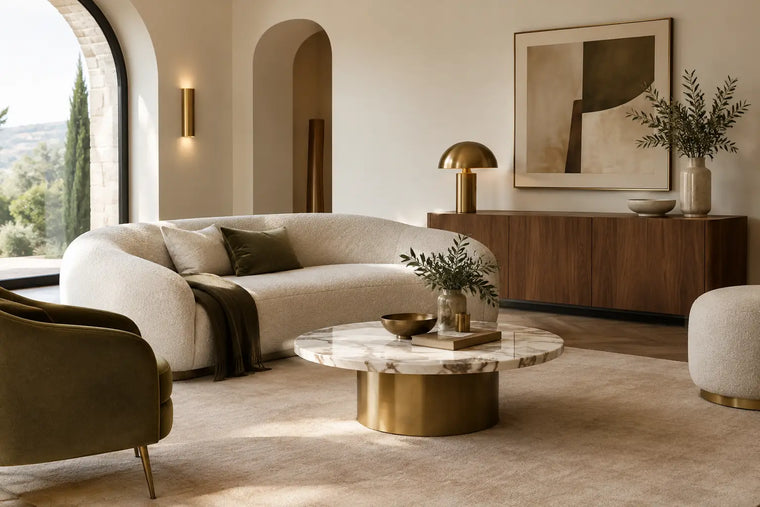

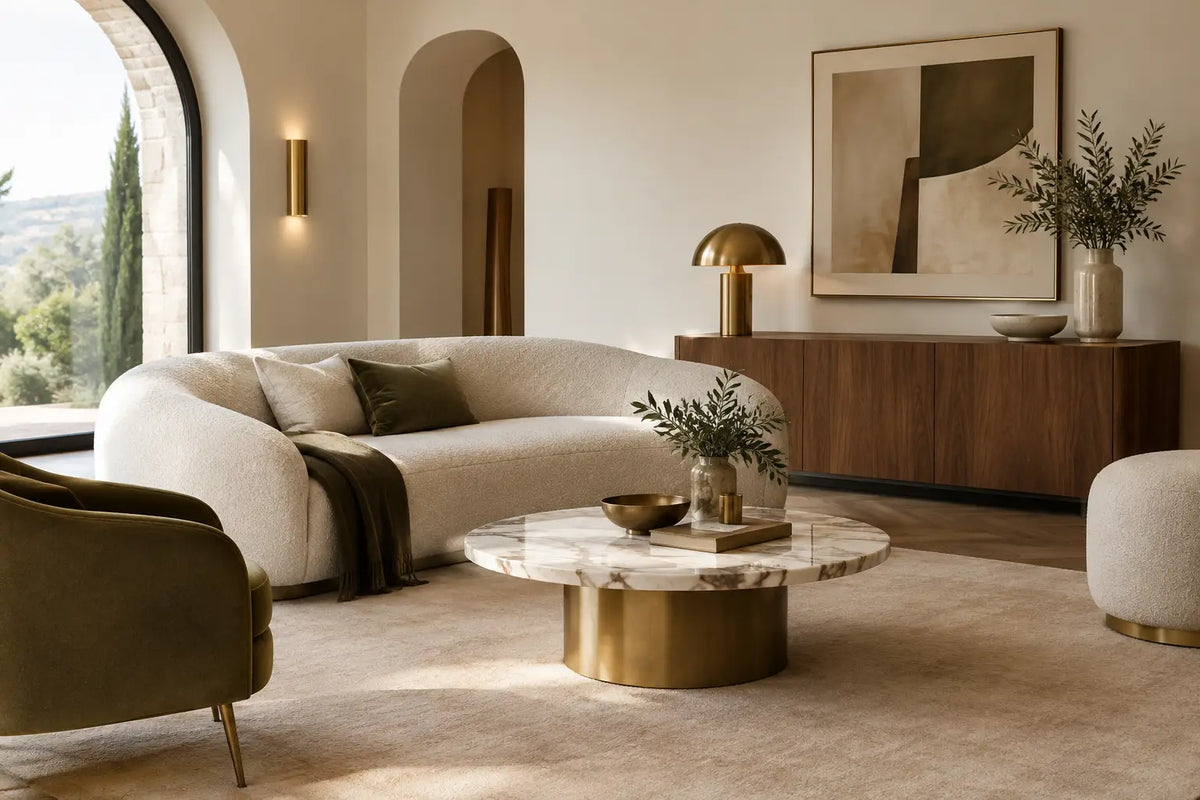
A beautifully proportioned Italian sofa can make an ordinary room feel resolved before a single accessory is placed. That promise of poise is precisely why an Italian furniture review should look beyond a recognisable label or dramatic showroom silhouette. The best pieces bring together design intelligence, material knowledge and manufacturing discipline - qualities that reveal themselves gradually, through comfort, use and the way a room settles around them.
Italian furniture has long held a particular position in high-end residential design. It can be exceptionally contemporary, richly decorative or almost restrained in its simplicity. What joins the strongest examples is not one visual style, but an attitude to proportion, tactility and detail.
Italian Furniture Review: What Sets It Apart
Italy’s furniture industry is not a single aesthetic or production method. A sculptural sofa from northern Italy, a hand-finished walnut dining table and a precision-engineered wardrobe system may all be Italian, yet their qualities and intended roles are very different. The country’s reputation rests on established specialist districts, often supported by long relationships between designers, upholsterers, cabinetmakers, metalworkers and stone fabricators.
This collaborative culture matters. It allows a designer’s intention to survive the journey from drawing to finished object: the curve of an armrest remains convincing, the junction between timber and metal is carefully resolved, and a large upholstered form maintains its proportions rather than appearing swollen or under-filled. In a well-designed home, these apparently small decisions create visual calm.
There is also a willingness among leading Italian makers to invest in forms that are technically demanding. A low sofa may require a hidden structural frame to retain comfort. A dining chair with a fine profile may depend on precisely formed plywood, a metal substructure or expert saddle stitching. Such work is not automatically superior because it is complicated; however, it can produce furniture that feels both lighter and more assured than its dimensions suggest.
The trade-off is that design-led pieces can be uncompromising. Some low-profile seating suits a formal reception room beautifully but may not offer the support preferred for long evenings of reading. A table with an exceptionally slim top may need careful planning around chair arms, place settings and daily family use. Italian design rewards selection with a clear brief rather than selection by image alone.
Craftsmanship Is Found Beneath the Surface
A reliable assessment begins with construction. For cabinetry and tables, inspect how the principal materials meet. Solid timber is valuable where its natural movement and grain can be appreciated, but it is not the only mark of quality. Veneered panels, when properly specified, offer excellent stability and make possible broad, elegant surfaces with carefully matched grain. The question is whether the substrate, veneer thickness, edging and finish have been considered as a complete system.
On timber furniture, look for consistency in colour and grain direction, particularly across wide doors or drawer fronts. Open-pore lacquer, oil and wax finishes each behave differently over time. Oil can be pleasingly repairable but requires sympathetic care; a lacquer may offer greater resistance to daily marks but can be harder to touch up invisibly. Neither is universally right. A dining table in a busy family house deserves a different finish from a console in a lightly used entrance hall.
Upholstery needs equal scrutiny. The outer fabric is only one layer of the experience. A substantial internal frame, well-chosen webbing or spring support, and a carefully calibrated combination of foam, fibre and feather determine how a sofa sits after several years. Loose feather-wrapped cushions can feel wonderfully generous, but they need regular plumping and will not suit every household. High-resilience foam provides a more disciplined appearance and easier maintenance, although comfort depends on density, layering and seat depth rather than foam alone.
Leather should be judged with similar nuance. Natural markings and tonal variation are often signs of an authentic, lightly corrected hide, not flaws to be avoided. Yet a delicate aniline leather may be impractical in a sunny family room or on dining chairs exposed to frequent spills. Protected leathers can be a more considered choice where durability is paramount, provided the finish retains sufficient softness and character.
Proportion, Comfort and Architectural Fit
Furniture rarely disappoints because it looks poor in isolation. It disappoints because it was not measured against the architecture, circulation and habits of the people using it. This is especially relevant to Italian collections, where generous modular sofas and statement dining tables are often designed with expansive rooms in mind.
Before committing, consider the full footprint rather than the headline dimensions. A sofa needs space for its back cushions, arms and surrounding circulation. A dining table requires room not only for chairs but for a chair to be pulled back comfortably. In a London flat, a table that appears modest in a showroom can quickly compromise the route between kitchen and living area.
Seat height, depth and back angle should be tested rather than assumed. A deep, relaxed sofa can be ideal for a media room, where reclining is part of the brief. In a drawing room intended for conversation, a slightly more upright seat often supports the occasion better. Similarly, the height of a bedside table must relate to the finished mattress level, while a sideboard should accommodate both storage needs and the visual scale of the wall behind it.
The most successful schemes create a conversation between furniture and architecture. A strong marble table can anchor a room with simple wall treatments, while a highly detailed period envelope may call for quieter contemporary forms. This is where a complete design approach is valuable: lighting, rug placement, joinery and window treatments all influence how a furniture piece is perceived and used.
Customisation: The Real Advantage of Italian Furniture
Many of the finest Italian manufacturers offer a substantial range of sizes, modules, finishes and upholstery options. This is not an excuse to personalise every element. It is an opportunity to tune a piece to its setting.
A sectional sofa might be refined by reducing one module to preserve a view, changing the chaise orientation to suit circulation, or choosing a firmer seat construction for more formal use. A dining table may be specified in a length that respects room proportions, with a top material selected for the level of daily use. On a bespoke project, these decisions should sit within a wider material palette rather than being made independently from screen samples.
Customisation also demands discipline. Timber, stone and fabric samples should be viewed together and, where possible, in the room’s natural and artificial light. A warm grey fabric can read taupe beside one stone and cool beside another. A bronzed metal finish may be elegant against smoked oak but feel overly heavy with dark marble. Good specification is a process of editing, not adding options.
Lead times are part of the equation. Much Italian furniture is made to order, particularly where a chosen fabric, lacquer or configuration is involved. This allows for better tailoring, but it requires early decisions and coordinated procurement. Storage, access, delivery routes and installation sequencing should be addressed well before completion of building works. A large one-piece sofa or stone-topped table can be difficult to manoeuvre through narrow stairs or a restricted lift, regardless of its merits once installed.
How to Judge Value Beyond the Label
An Italian name alone is not a guarantee of lasting quality. Some collections are designed for contract use, some for occasional residential settings, and some for intensive daily life. Ask direct questions about the frame, upholstery construction, finish, care requirements and replacement availability. A supplier should be able to explain these details clearly, rather than relying solely on a country of origin or a designer signature.
It is also prudent to distinguish between visual novelty and enduring relevance. A highly expressive silhouette can be exactly right for a home with a confident contemporary language, but it should earn its place through comfort, craftsmanship and a relationship to the rest of the scheme. Timelessness does not mean avoiding character. It means choosing pieces whose material integrity and proportion remain persuasive after the initial excitement has passed.
For clients furnishing an entire residence, a considered procurement process protects both the design and the investment. At Touched Interiors, furniture selection is often coordinated alongside spatial planning, technical detailing and installation, because a beautifully made object still needs the right setting, dimensions and service behind it.
The most rewarding Italian furniture is not selected to announce itself from the doorway. It is chosen because, years later, the hand still notices the finish, the body still appreciates the comfort, and the room still feels composed around it.
Touched Interiors
The Insider is written by the Touched Interiors design studio in Manchester, founded by Kunal Trehan in 2009 and named Interior Design Studio of the Year in 2024 and 2025. About the studio.