A room can be richly furnished and still feel restless. Too many competing finishes, decorative gestures without purpose, lighting chosen only for effect: these are often the details that prevent a home from feeling settled. Quiet luxury interiors take a different approach. They rely on proportion, material integrity and an assured sense of restraint to create spaces that reveal their quality gradually.
This is not minimalism in the strict sense, nor is it an exercise in making every room beige. It is a design language rooted in discernment: choosing fewer, better elements and giving each one the space, light and context it deserves. The result should feel personal, comfortable and immovable from fashion, rather than visibly expensive at first glance.
What defines quiet luxury interiors?
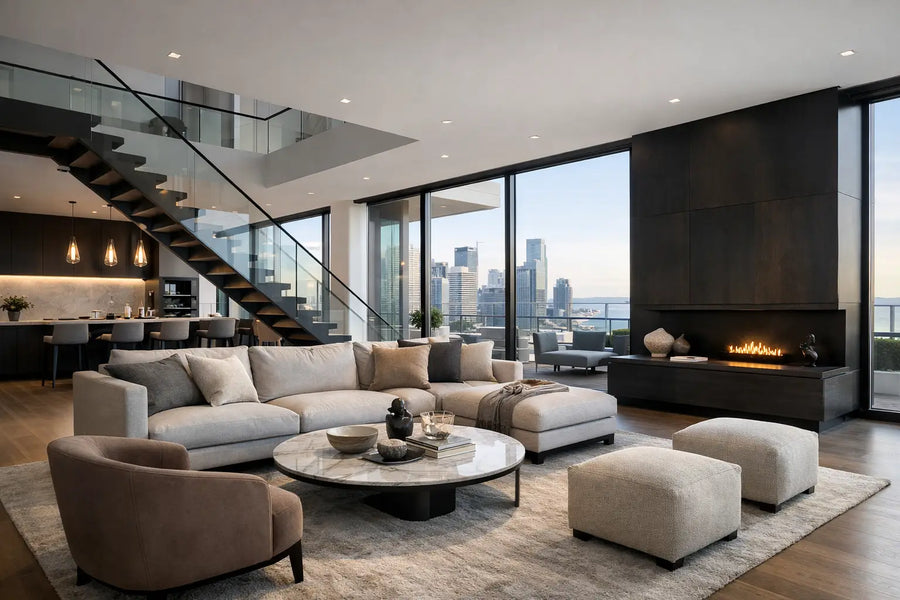
Quiet luxury is best understood as an atmosphere rather than a prescribed look. A contemporary limestone fireplace, a hand-finished walnut cabinet and a deep mohair-upholstered sofa can all belong in the same room, provided their scale and finish are considered as a whole. The luxury lies in the quality of the decisions, not in overt display.
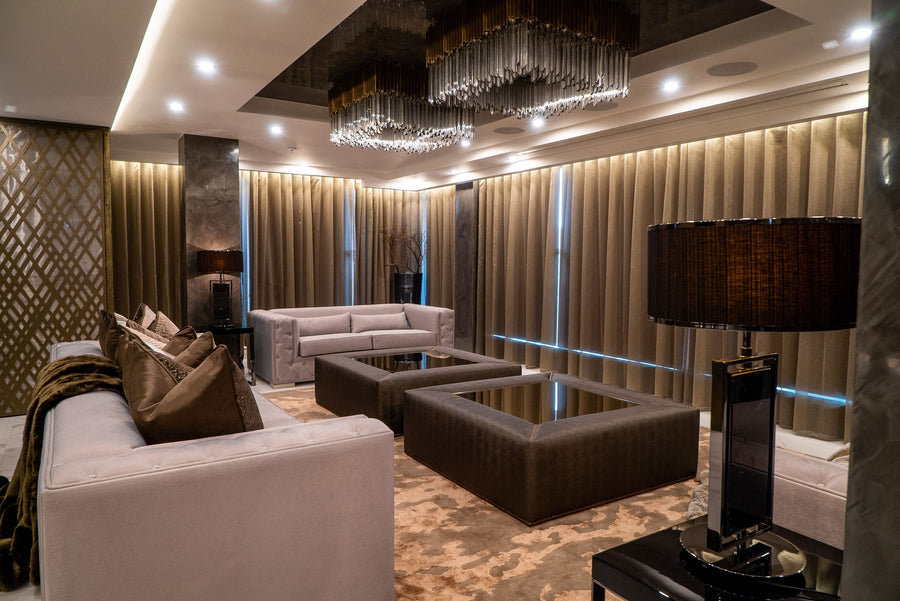
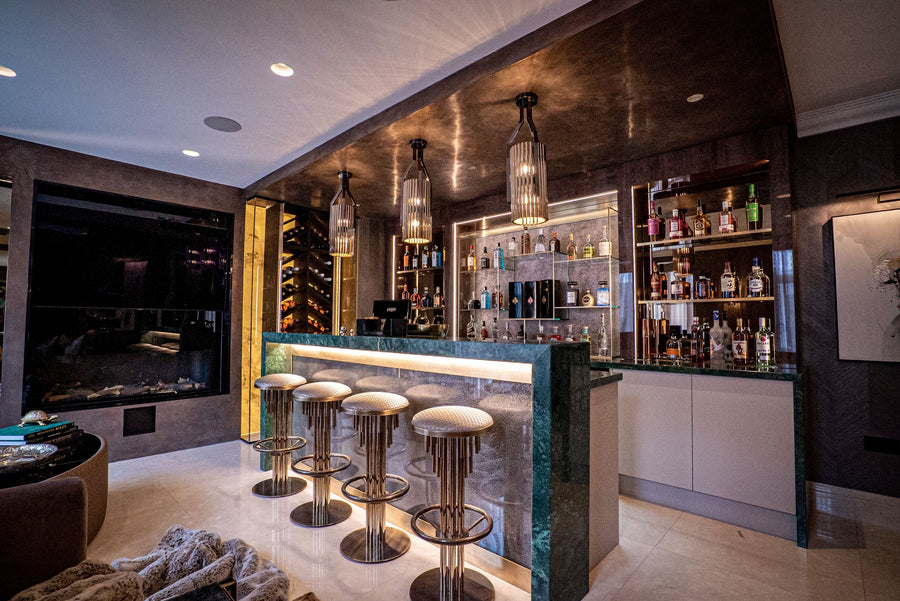
Materiality is central. Natural stone with honest variation, timber with visible grain, cast metal, wool, linen, leather and lacquered finishes all acquire a presence through touch and age. They do not need to announce themselves. A beautifully book-matched marble surface or a finely tailored curtain heading can carry more authority than a highly patterned feature wall.
Equally, quiet luxury depends on what is not present. Visual relief is essential in a refined scheme. That may mean allowing a sculptural chair to sit against a calm wall, selecting one exceptional pendant rather than a series of decorative fittings, or keeping open shelving limited to objects with genuine significance. Restraint is not absence. It is editing.
Begin with architecture and proportion
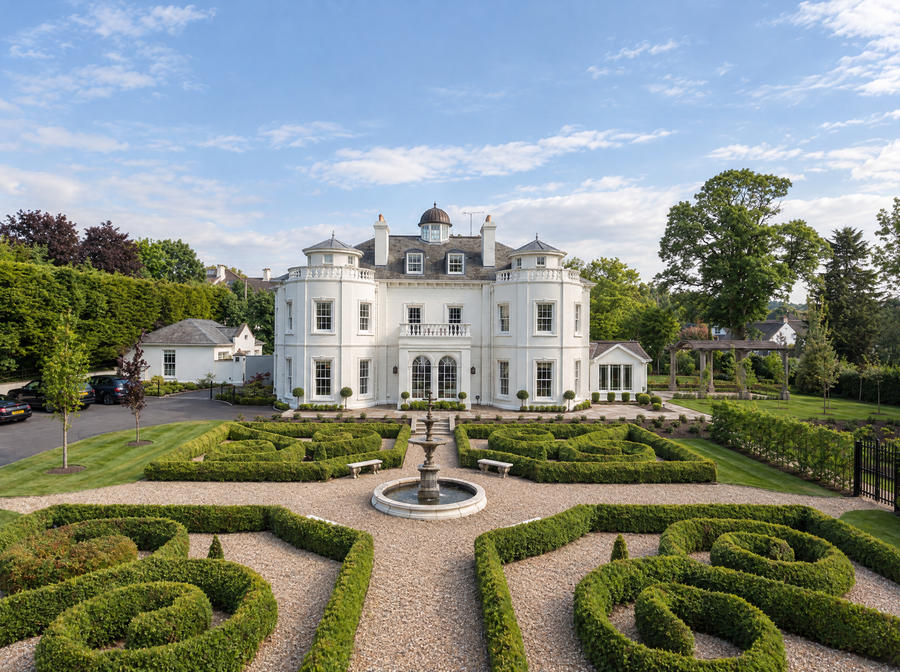
The most successful interiors are resolved from the envelope of the room outward. Before selecting furniture, consider ceiling height, natural light, window proportions, circulation routes and the relationship between adjoining spaces. These are not technical concerns separate from decoration. They determine how a room will feel.
In a tall drawing room, furniture with a low visual profile can make the space seem under-furnished, even if the individual pieces are substantial. Conversely, oversized seating in a compact London flat can compromise movement and obscure the room’s best architectural features. Quiet luxury asks for precise scale: generous where comfort calls for it, disciplined where the architecture demands it.
Joinery is often where this approach becomes most convincing. Bespoke cabinetry can align with existing cornices, conceal practical storage and integrate lighting without creating clutter. The aim is not to fill every wall. It is to make necessary functions feel considered and calm. A well-designed media wall, for example, should accommodate technology, display and storage without allowing any one of them to dominate the room.
Plan for how the room is actually used
A formal-looking scheme that cannot support daily life is never truly luxurious. Seating should encourage conversation, not merely photograph well. A dining room needs enough clearance for chairs to be drawn back comfortably. In bedrooms, bedside lighting must be useful for reading as well as flattering in the evening.
This is particularly relevant in homes designed for entertaining, families or frequent international travel. Durable upholstery, discreet charging points, carefully positioned storage and layered lighting make a property easier to inhabit. The quietest rooms are often the most technically resolved because their practical workings have been anticipated rather than added later.
Build a palette with depth, not noise
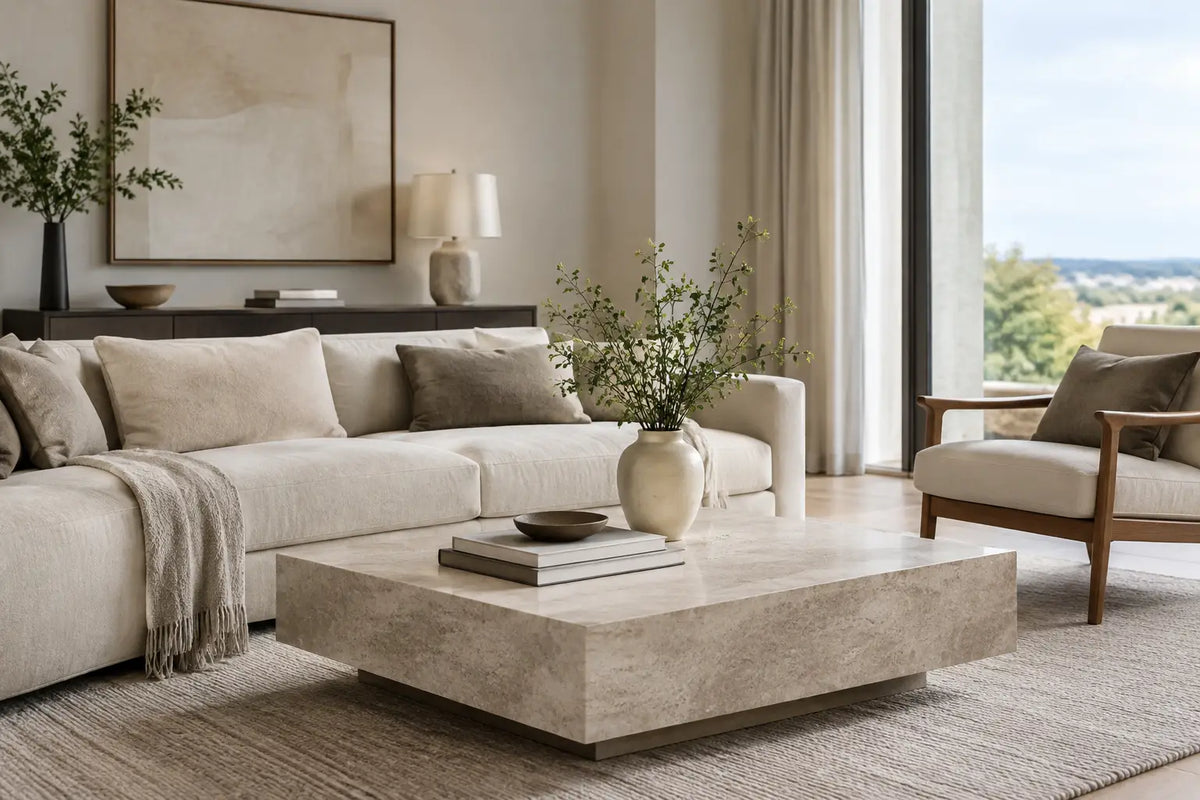
A neutral palette is often associated with quiet luxury, but neutrality alone is not enough. A room of matching creams can appear flat and impersonal. Depth comes from subtle shifts in tone, texture and reflectivity: warm plaster against cool stone, matte timber beside softly burnished bronze, bouclé against smooth leather.
Start by identifying the undertones already present in the architecture. A grey-veined marble may suggest soft mushroom, tobacco, charcoal or muted green. Oak flooring may sit better with warm whites and clay-based tones than with stark grey. Working from these cues creates continuity, particularly across open-plan areas and large properties where abrupt changes of finish can become visually disruptive.
Contrast still has a role. A dark ebonised console against pale plaster, or an antique brass light fitting within a restrained contemporary room, gives a scheme definition. The difference is that contrast is used strategically rather than repeatedly. One deep note can anchor a room; several competing statements can fragment it.
Invest in the pieces people experience most
Quiet luxury does not require every element to be bespoke, but it does reward intelligent allocation of budget. Prioritise the pieces that carry the greatest visual, physical and practical weight: seating, dining furniture, beds, rugs, window treatments, cabinetry and lighting. These are the elements that shape daily experience and are costly to replace once a room is complete.
A sofa should be judged beyond its silhouette. Consider the depth and pitch of the seat, the resilience of its cushion construction, the tailoring at the seams and how the upholstery will mature. A dining table deserves similar scrutiny. Its edge profile, base configuration, surface treatment and proportion to surrounding chairs all affect how it performs over years of use.
For made-to-order furniture, small adjustments can make a profound difference. A change in seat height, arm width, timber stain or fabric repeat may be the detail that allows a piece to belong to a particular room. Bespoke design is most valuable when it responds to the architecture and the client’s habits, rather than existing simply for rarity.
Choose patina over perfection
Some materials are selected for their immaculate finish; others become more compelling with use. Honed stone, aged brass, oiled timber and good leather can develop a patina that records life without appearing worn out. This makes them especially suited to homes intended for long-term enjoyment.
That said, patina is not appropriate everywhere. High-traffic family kitchens may benefit from engineered stone or carefully specified porcelain in areas where acidic spills and frequent cleaning are likely. Fine plaster finishes may need protection in narrow hallways. The correct choice depends on the household, maintenance expectations and location of the material. Lasting design is never careless about performance.
Use lighting to create composure
Lighting is frequently the dividing line between an expensive room and a convincing one. A single ceiling fitting rarely provides enough control for dining, relaxing, reading or hosting. A layered lighting plan combines ambient illumination, task light and accent light, each controlled independently.
Wall lights can soften perimeter shadows and bring warmth to evening rooms. Table lamps introduce intimacy at seated level. Carefully directed joinery lighting can reveal texture in stone, timber or collected objects without turning them into a display. Decorative fittings should be selected for their form in daylight as well as their effect after dark.
The temperature and quality of light matter as much as the fixture itself. Warm, well-dimmed light generally supports the depth of natural materials far better than a harsh, uniform wash. During early planning, lighting positions should be coordinated with furniture layouts, artwork and architectural details. Retrofitting may be possible, but it rarely achieves the same visual calm.
Allow personality to surface quietly
There is a risk that restrained interiors become anonymous. The answer is not to introduce indiscriminate ornament, but to layer in objects with provenance, memory or artistic value. A ceramic collected on travels, a sculptural vessel, a family photograph in an understated frame or an artwork selected for its emotional pull can make a composed room feel deeply individual.
Display should be curated with the same care as furniture. Grouping objects by material, scale or tonal relationship usually feels more intentional than distributing small accessories across every available surface. Leave room around significant pieces. A home should communicate the life of its owners, not the contents of a showroom.
At Touched Interiors, this balance between architectural discipline and personal expression is fundamental to creating homes that remain relevant long after a particular trend has passed. The most enduring schemes do not seek attention. They reward it, revealing craft, comfort and character with time.
A quiet interior is not one that says nothing. It is one where every material, proportion and object has been given a reason to be there.
Touched Interiors
The Insider is written by the Touched Interiors design studio in Manchester, founded by Kunal Trehan in 2009 and named Interior Design Studio of the Year in 2024 and 2025. About the studio.