A pale sofa in a busy family room is not an indulgence if it has been specified properly. Equally, a dark, supposedly practical fabric can quickly feel tired if its weave catches dust, pills under friction or shows every brush mark. The question of which upholstery suits family homes is less about choosing the hardest-wearing material on a sample rail and more about understanding how a room is truly used.
For a considered family interior, upholstery needs to accommodate the ordinary rituals of home: children climbing onto an armchair with a book, a dog settling in a favourite corner, weekend entertaining, and the occasional spilt drink. It should do this without making the room feel defensive or overly casual. The most successful schemes balance resilience with softness, visual depth and a quality of finish that improves the furniture over time.
Which upholstery suits family homes?
For most family rooms, a high-quality performance fabric, a tightly woven wool blend, or a carefully selected protected leather will offer the most convincing combination of practicality and refinement. Each has a distinct character, and none is automatically right for every household.
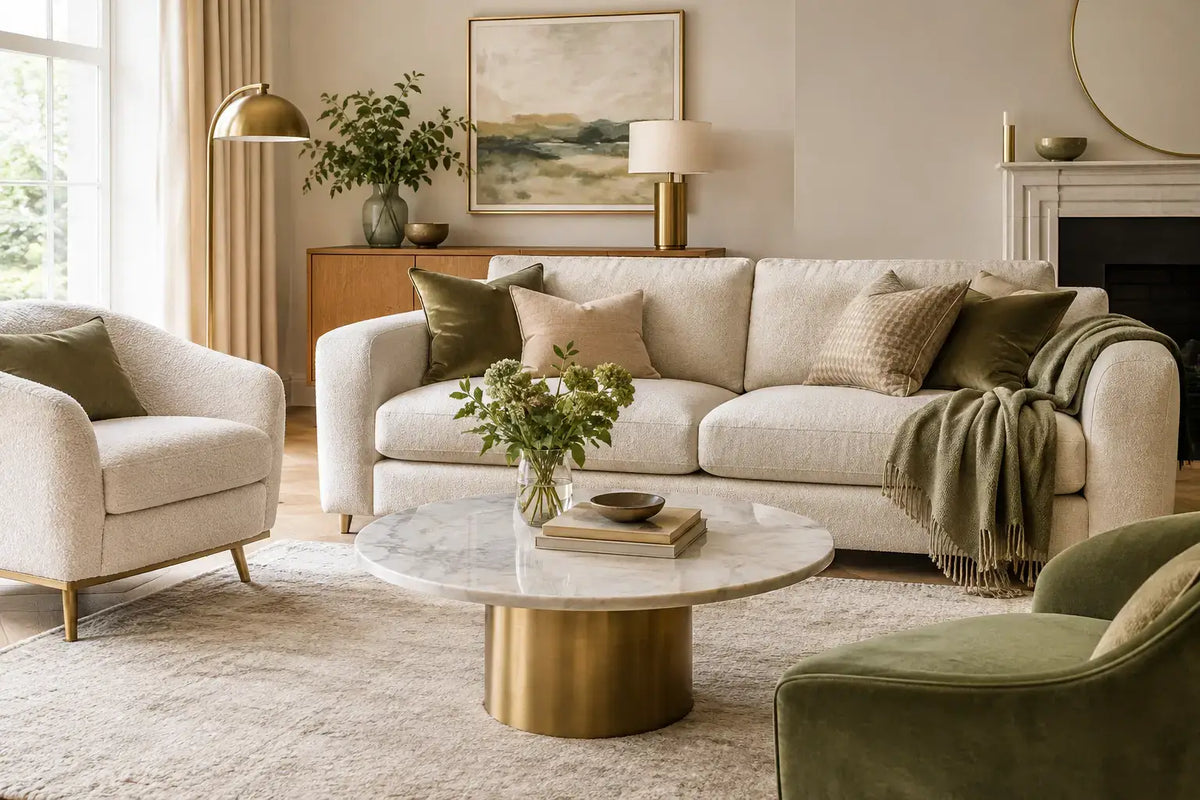
Performance fabrics have progressed considerably from the utilitarian finishes once associated with stain resistance. The best contemporary examples can have the tactility of linen, bouclé, chenille or velvet, while incorporating fibres or treatments designed to resist liquid penetration and simplify cleaning. They are particularly useful on generously scaled sectional sofas, kitchen banquettes and pieces that will see daily use.
A wool blend is often the quieter, more enduring choice. Wool has a natural spring, good resistance to creasing and an ability to disguise minor marks within its texture. In a tailored sofa or occasional chair, a dense wool or wool-mohair cloth brings a sense of permanence that synthetic-heavy alternatives rarely achieve. It is not impervious to spills, however, and a household with very young children may prefer it for formal living areas rather than the principal television room.
Leather remains an intelligent option, especially in homes where pets are part of family life. A good semi-aniline or protected leather is easy to wipe and develops character with use. Yet the finish matters greatly. Very soft aniline leather has an exceptional natural appearance, but it will absorb oils and spills more readily. Highly corrected leather can be extremely practical, although it may lack the richness and depth expected in a finely furnished room. A lightly protected hide usually provides the best middle ground.
Start with the room, not the fabric swatch
The same upholstery can perform very differently depending on light, layout and the role of the room. A formal drawing room used mainly at weekends can accommodate a silk-mix velvet or a delicate linen blend, provided the family understands the level of care involved. A media room, by contrast, calls for a material chosen for abrasion resistance, recoverability and comfort over extended periods.
Natural light deserves close attention. Mid-toned fabrics in woven constructions tend to be forgiving in bright rooms because they conceal slight variations in colour and surface texture. Dark navy, charcoal and black can reveal lint, pet hair and dried water marks surprisingly clearly. At the other end of the spectrum, a clean ivory may be entirely viable in a performance textile, but it requires a household willing to deal with marks promptly.
Scale also changes the decision. On a small accent chair, a richly textured bouclé can be delightful and relatively easy to manage. Across a large corner sofa, its raised loops may prove less suitable for homes with cats, jewellery catches or energetic play. The larger the upholstered surface, the more important it is to assess a fabric under real conditions rather than falling for a small, flattering cutting.
Understanding durability beyond a rub test
Abrasion testing is useful, but it should not be treated as a complete answer. A high rub count indicates that a fabric can withstand surface friction, but it does not tell you how easily a loose weave will snag, how a pile will shade, or how the colour will respond to sunlight. It also says little about the internal quality of the furniture itself.
A family sofa needs a sound frame, ideally hardwood or engineered timber of high quality, with properly supported suspension and seat cushions that suit the intended level of use. Feather-wrapped cushions offer extraordinary comfort but need regular plumping. Foam or fibre constructions retain a tidier profile and can be preferable in a hard-working room. Many bespoke specifications combine supportive foam cores with feather wraps, giving a more composed appearance without sacrificing comfort.
Ask to see the fabric’s technical specification, including its composition, cleaning guidance, resistance to pilling and lightfastness. More importantly, handle a full memo where possible. Run your hand across it in different directions, fold it sharply, look at it in daylight and place it beside flooring, paint and joinery. This is where a fabric’s character becomes clear.
Materials that reward thoughtful use
Velvet is frequently dismissed as impractical for families, which is too broad a judgement. A dense cotton or mohair velvet can be remarkably durable, and its pile gives a sofa visual depth that flat weaves cannot replicate. It will show pressure marks and directionality, particularly in sunlight, but these are part of velvet’s inherent nature rather than a fault. For families who value a more expressive, layered room, a performance velvet or resilient cotton blend can be an excellent choice.
Linen has a relaxed, elegant quality but requires realistic expectations. It creases, can mark with water and generally wears best in lower-use rooms or on loose-covered furniture designed to be cleaned professionally. A linen-look performance fabric may be a more sensible choice for a family sitting room, preserving the visual ease without demanding constant vigilance.
Bouclé and heavily textured weaves create warmth and architectural interest, especially on sculptural chairs. Their trade-off is vulnerability to pulling and trapping debris. Consider using them on occasional seating rather than on the family’s primary sofa. Similarly, loosely woven tweeds can be beautiful and long-lasting, but should be assessed carefully in homes with cats or children who regularly use the furniture as a climbing frame.
Colour, pattern and the art of concealment
Practical upholstery need not default to beige. Indeed, a warm stone or greige can be less forgiving than a softly patterned mineral blue, moss green or tobacco brown. Mélange yarns, subtle herringbones, small-scale geometrics and broken stripes disguise everyday variation while giving a room more depth than a plain fabric.
Pattern also allows a family home to feel collected rather than cautious. A restrained weave on the main sofa can sit beautifully beside a bolder upholstered armchair, while cushions and throws introduce materials that are easier to change or clean. This layered approach protects the longevity of larger investment pieces without reducing the scheme to a series of safe choices.
It is wise to avoid placing the palest and most absorbent fabric on the seat where children eat, pets sleep or adults tend to rest with coffee. Instead, reserve more delicate textiles for backs, occasional chairs and quieter spaces. Good interior design does not demand that every surface performs the same task.
Care is part of the specification
Even the most resilient upholstery benefits from a consistent care routine. Vacuuming with an upholstery attachment removes abrasive dust from the weave, while rotating cushions helps distribute wear and preserve an even silhouette. Blot spills immediately rather than rubbing them into the fibres, and avoid improvised cleaning products that can leave a tide mark or strip a specialist finish.
For bespoke or investment furniture, retaining a small amount of spare fabric is prudent. It allows for future repairs, replacement cushions or discreet professional restoration if an accident occurs years later. This is a modest detail that can meaningfully extend the life of a piece.
The right upholstery should allow a family to live comfortably, not make them anxious about living at all. Select a fabric that reflects the way the room is used, specify it alongside a well-made frame and cushions, and let its texture, colour and ageing qualities become part of the home’s story.
Touched Interiors
The Insider is written by the Touched Interiors design studio in Manchester, founded by Kunal Trehan in 2009 and named Interior Design Studio of the Year in 2024 and 2025. About the studio.