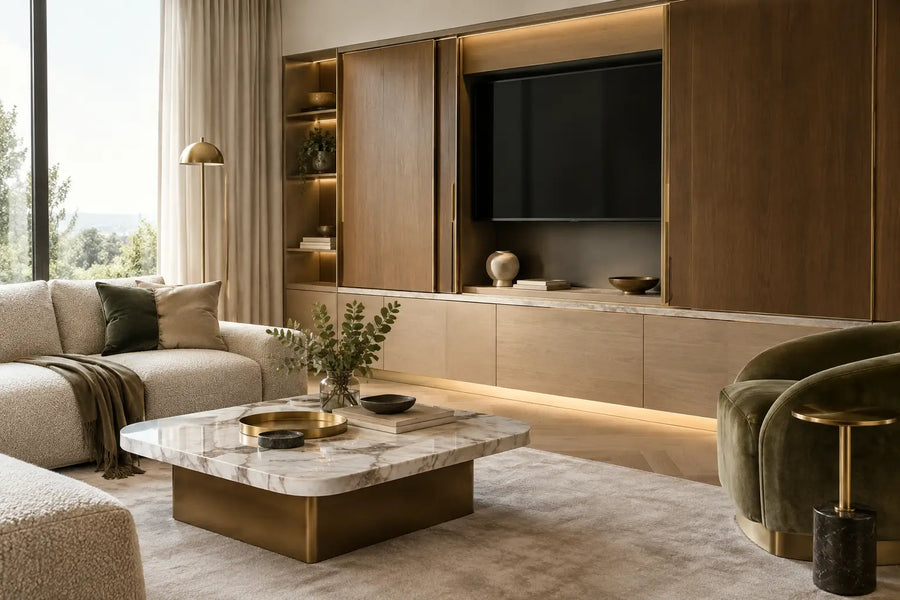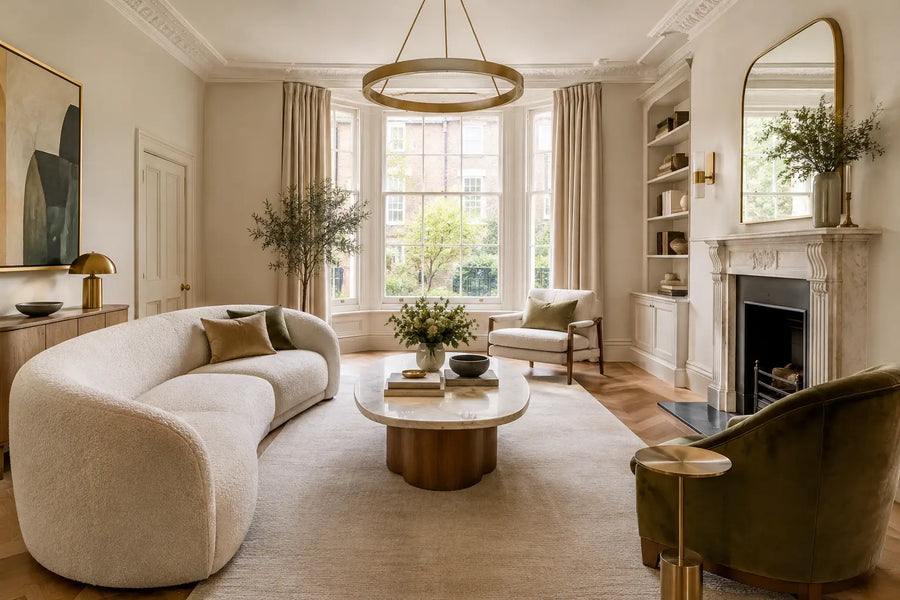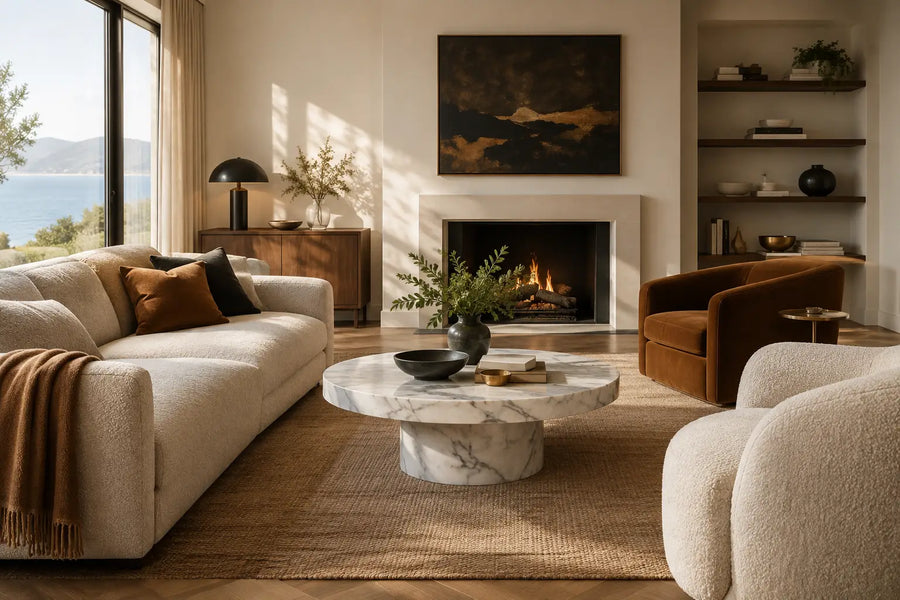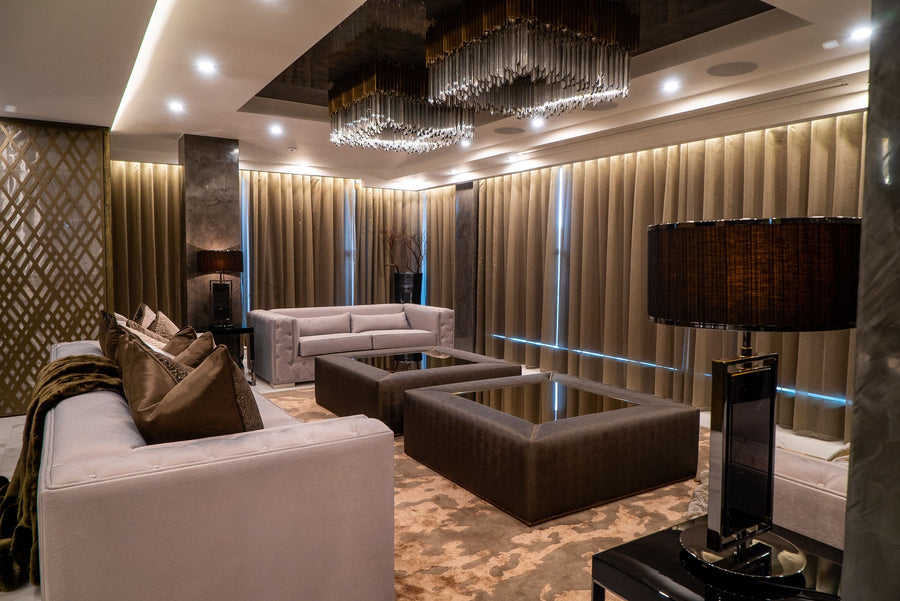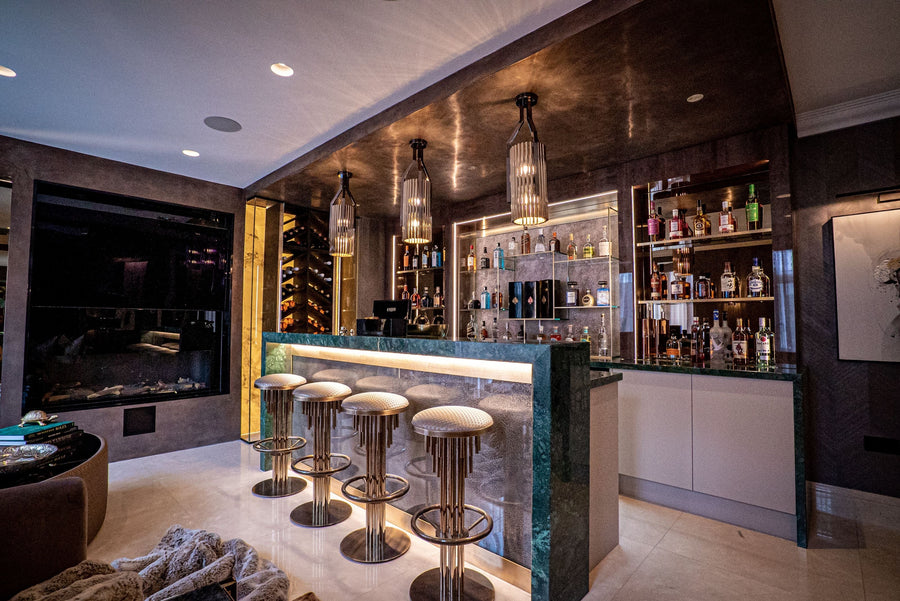




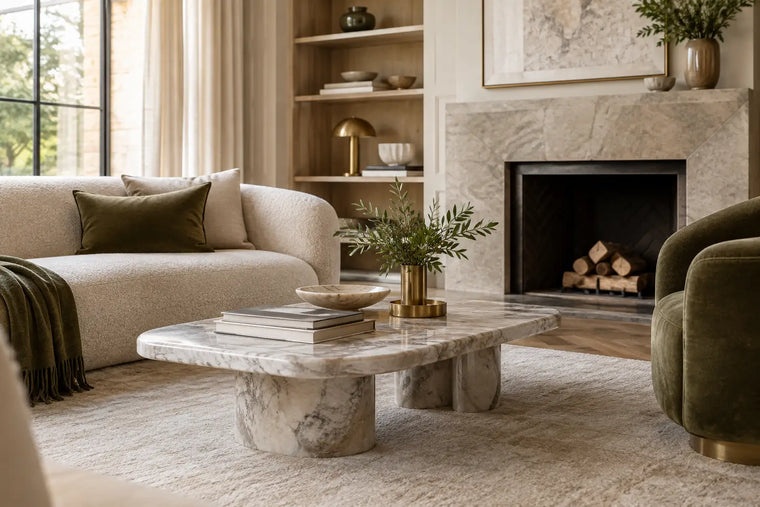

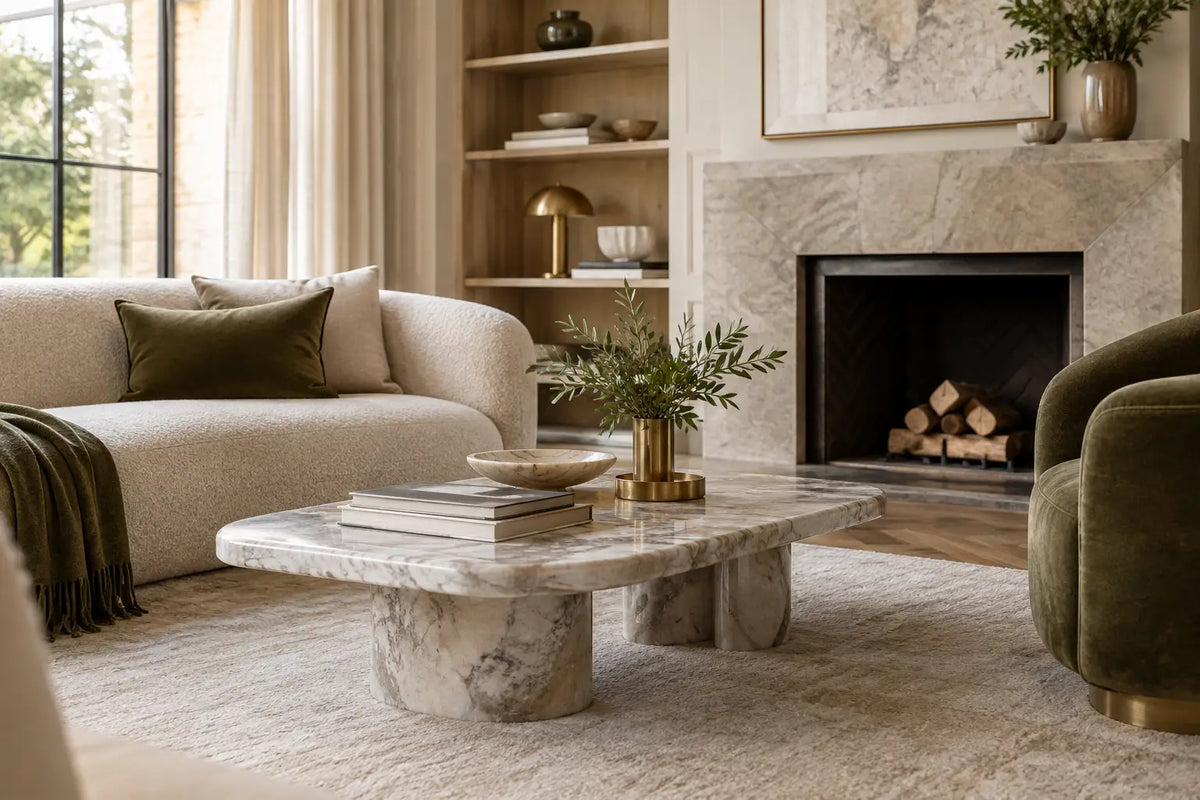
A limestone floor that feels composed beneath bare feet, a richly veined marble island, or a honed quartzite hearth can give a room an authority that manufactured surfaces rarely achieve. Yet specifying natural stone is not simply a question of choosing a colour from a sample. It is a technical and aesthetic decision shaped by geology, scale, intended use and the way a material will mature within a home.
The most successful schemes allow stone to retain its character. Natural variation, mineral marks and tonal shifts are not defects to be edited out; they are the evidence of a material formed over time. The designer’s role is to understand that character well enough to place it with confidence.
What specifying natural stone really involves
Stone is often discussed as though each category were a single material. In practice, two slabs described as Calacatta marble may differ considerably in ground colour, veining, translucency and movement. Equally, a pale limestone can range from quiet and chalky to markedly fossilised and animated.
A specification should therefore begin with the actual block, batch or slabs proposed for the project, rather than a small hand sample alone. Samples remain useful for assessing finish and general tone, but they cannot communicate the scale of a large vein crossing an island, the frequency of shells in a floor, or the tonal variation across a bookmatched bathroom wall.
At this stage, it is worth establishing what the stone must do. A fireplace surround has different demands from a busy family kitchen; a guest cloakroom vanity is not subject to the same wear as a principal bathroom floor. Beauty and performance should be resolved together, before the stone reaches the workshop.
Begin with the architectural context
Natural stone should belong to the architecture, not sit on top of it as decoration. Consider the quality of daylight, ceiling height, joinery tones and the visual weight of adjacent materials. A dark, tightly grained stone may give a large, light-filled room welcome definition, while the same choice can feel heavy in a low-lit hall with dark timber and limited reflective surfaces.
Scale is equally important. Strongly veined marble can be magnificent on a generously proportioned island or a tall shower wall, where there is room for its drawing-like movement to unfold. In a small niche, it may read as fragmented. Conversely, finely textured limestones and quieter quartzites often bring calm continuity to large floor areas, particularly where the aim is to let furniture, art and architectural detailing take the foreground.
There is no universal rule that pale stone makes a room larger or dark stone makes it more dramatic. The effect depends on the available light, joint layout, finish and what surrounds it. A considered material palette is usually more persuasive than an isolated statement surface.
Choose the stone for its working life
Marble, limestone, travertine, granite and quartzite are geological families, not interchangeable labels. Their porosity, hardness, susceptibility to etching and visual character vary substantially, including within the same family.
Marble is prized for depth, luminosity and veining. It remains an exceptional choice for bathrooms, fireplace surrounds, occasional tables and carefully used kitchen surfaces. However, many marbles will etch when exposed to acidic substances. This is a chemical reaction rather than a stain, and it can appear as a dull mark on a polished finish. In a kitchen used daily for citrus, wine and cooking, a client must be comfortable with a gently lived-in surface or select a more forgiving alternative.
Quartzite is often chosen where the visual drama of marble is desired with greater resistance to scratching and etching. But the name alone offers no guarantee. Some stones marketed as quartzite are softer or more marble-like in composition than expected, so the precise material should always be verified with the supplier and tested against the intended use.
Limestone and travertine offer a softer, more settled character, particularly for flooring and wall cladding. They can be beautifully tactile underfoot, though their porosity and relative softness demand an appropriate finish, a reputable sealing system and realistic expectations in heavily used areas. Dense granites and certain engineered sintered surfaces may be more practical for exacting kitchen use, but they produce a different visual and tactile experience.
The right choice is rarely the hardest stone available. It is the one whose natural behaviour suits the life of the room.
Finish changes both appearance and performance
A polished finish intensifies colour and reflection, bringing particular depth to marble and darker stones. It can suit formal bathrooms, vanity tops and decorative wall applications, but it may reveal etching and water marks more readily. On floors, it can also be unsuitable where slip resistance is a concern.
Honed stone has a softer, matte appearance and is often more forgiving in everyday settings. It works particularly well for kitchen worktops, flooring and contemporary bathrooms, where a quieter light response is preferred. Leathered, brushed, sandblasted and tumbled finishes introduce further texture, each changing how the stone catches light and how easily it can be cleaned.
Finish samples should be reviewed under the intended lighting. A honed slab viewed in a bright showroom can appear very different beneath warm evening lighting or beside a large north-facing window. For a substantial installation, a full-size approval sample is a sensible safeguard.
Plan the slabs, joints and edges before fabrication
The most refined stonework is planned long before installation. Slab layout determines where veins meet, how a return is formed around an island and whether a bookmatched pattern appears balanced rather than theatrical. These decisions cannot be corrected once pieces have been cut.
For a feature wall or shower enclosure, designers may choose bookmatching, in which adjacent slabs mirror one another along a cut edge. This can create an extraordinary focal point, but it demands sufficient slab size, careful selection and a clear understanding that the result will be inherently expressive. Where a calmer effect is required, vein direction may instead be aligned or deliberately varied to avoid an overly symmetrical composition.
Joints should be treated as part of the design. Larger-format slabs reduce joint lines, though they also introduce handling constraints and may not be appropriate for every access route or substrate. On floors, tile module, room geometry and threshold positions should be coordinated early so that narrow cuts do not appear at prominent edges.
Edge profiles deserve the same attention. A simple eased edge can feel precise and contemporary; a deeper mitred profile creates visual mass without exposing a thick slab edge; a traditional ogee may suit a more classical setting. The detail should relate to the wider scheme rather than follow fashion in isolation.
Do not underestimate movement and support
Natural stone is heavy, often brittle at cut-outs, and unforgiving of inadequate support. Kitchen islands require properly engineered cabinetry or a concealed framework, especially with long cantilevers, thick mitred edges or dramatic waterfall ends. Vanity tops must account for basin openings, tap penetrations and the potential for stress at narrow bridges of material.
Substrates also matter. Floors and walls need to be sufficiently stable, level and prepared for the stone format selected. Movement joints, waterproofing behind wet-area cladding and compatible adhesives are technical essentials, not contractor preferences. A fine material deserves a specification that extends to the layers beneath it.
This is where early coordination between interior designer, stone fabricator, joiner, architect and contractor has tangible value. It protects the visual intention while reducing the risk of late compromises around tolerances, access or structure.
Accept patina, but specify care intelligently
Natural stone asks for care, though not necessarily anxiety. A suitable impregnating sealer can help reduce absorption, but it does not make porous stone impervious to spills or prevent acid etching on calcium-based materials. It should be selected for the particular stone and renewed in line with the product guidance and the level of use.
Daily cleaning is usually straightforward: use a pH-neutral cleaner, a soft cloth or mop, and avoid abrasive pads or acidic household products. In kitchens, wiping spills promptly is sensible. In bathrooms, good ventilation and regular drying of heavily splashed surfaces will help prevent mineral deposits from obscuring the finish.
A degree of patina can be deeply attractive. The question is not whether a surface will remain factory-new, but whether its ageing will feel appropriate to the household and the architecture. For a formal pied-à-terre, a polished marble vanity may remain pristine with modest use. For a lively family kitchen, a honed quartzite or a carefully selected dense stone may offer a more relaxed proposition.
Specify with enough time to choose well
Lead times for quarry selection, slab reservation, fabrication, approvals and installation are often underestimated. Natural stone should be considered early in the design programme, particularly where a rare material, complex bookmatching or bespoke detailing is involved. Rushing the selection can mean accepting a batch that does not express the original intent.
At Touched Interiors, material selection is approached as part of the wider interior architecture: in dialogue with cabinetry, lighting, metalwork and the rhythms of daily life. The most enduring results come from that joined-up process, not from treating stone as a final decorative finish.
A well-specified stone surface will not remain static. Light will reveal different minerals throughout the day, touch will soften its character over years, and small traces of life may become part of its appeal. Choose it with clarity, detail it properly, and allow it the dignity of ageing honestly.
Touched Interiors
The Insider is written by the Touched Interiors design studio in Manchester, founded by Kunal Trehan in 2009 and named Interior Design Studio of the Year in 2024 and 2025. About the studio.